
Bharatiya Vyapar Mahotsav 2026 runs from 11 to 14 August across multiple halls, and those two facts, four days and several halls, define almost every decision an exhibitor should make about the event. A trade and commerce festival of this shape behaves differently from a tightly focused industry fair, and treating it like one is the reason many brands come away disappointed despite spending well. The first difference is the audience. A show built around trade, commerce, business networking and consumer products does not deliver a single homogeneous crowd. It delivers at least two crowds moving through the same aisles, sometimes at the same time and sometimes in distinct waves across the day. There is a business audience of distributors, retailers, wholesalers, sourcing agents, franchise seekers, service providers and entrepreneurs looking for products to stock, partners to work with or opportunities to invest in. There is also a general and consumer audience who came to see, sample, buy and enjoy the occasion, and whose numbers typically swell in the evenings and across the weekend portion of a four-day run. Both audiences are valuable, but they are not valuable in the same way, and a stand designed for one will visibly repel the other. A stand built entirely for serious trade discussion with high counters, closed meeting corners and no visible product will look unwelcoming to a consumer crowd and will sit empty during the busiest hours. A stand built entirely as a consumer spectacle with games, giveaways and queues will bury a distributor with a genuine proposal in a crowd of prize-seekers and will make your commercial team unreachable exactly when it matters. The workable answer is a layered stand, and the layering should be physical, not merely conceptual. The front edge, facing the aisle, is public and engaging, designed to attract, to entertain briefly and to communicate what you offer in a few seconds to anybody at all. Behind it sits a mid-zone for informed conversation, where product is shown properly and questions are answered. Deeper still, sheltered by the structure, sits a space where a serious business discussion can happen without shouting over a crowd. The second consequence of the multi-hall format is that visitors will never see everything, and many will never reach your hall at all unless given a reason. Your presence therefore has to work harder outside your own square metres. Listings, pre-show communication to your existing network, clear hall and stand numbers repeated everywhere, visible height on your structure and, where the organiser permits it, a presence at points where traffic concentrates all contribute more at a show like this than at a single-hall event. Four days is also long enough for word of mouth to work inside the venue, which means the impression you create on the eleventh and twelfth genuinely influences the traffic you receive on the thirteenth and fourteenth, and that is an opportunity most exhibitors leave entirely unused. Planning the run as four separate one-day shows, each with its own objective, its own expected crowd and its own staffing plan, is a far more productive frame than treating 11 to 14 August as a single long block of trading hours to be survived.
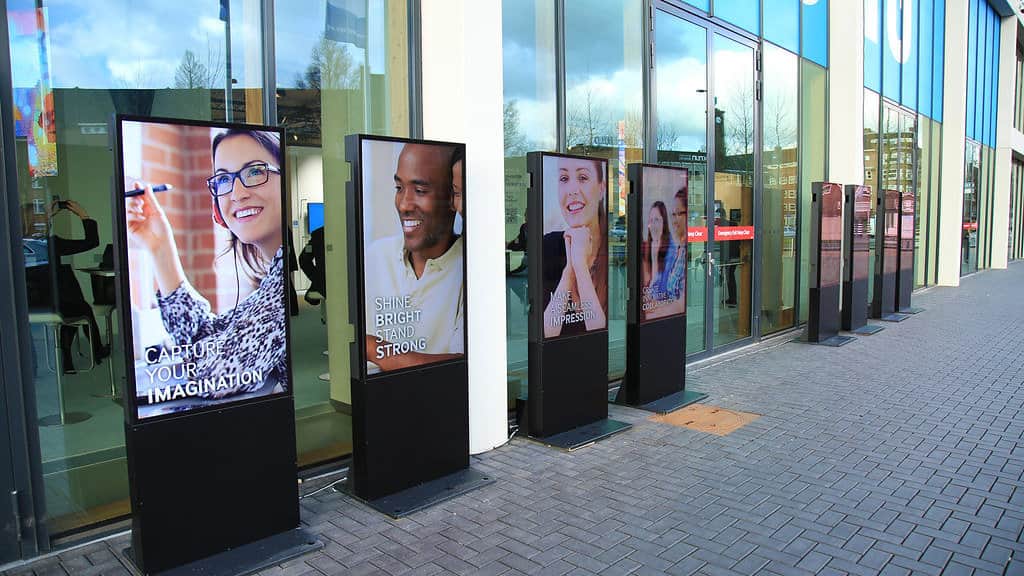
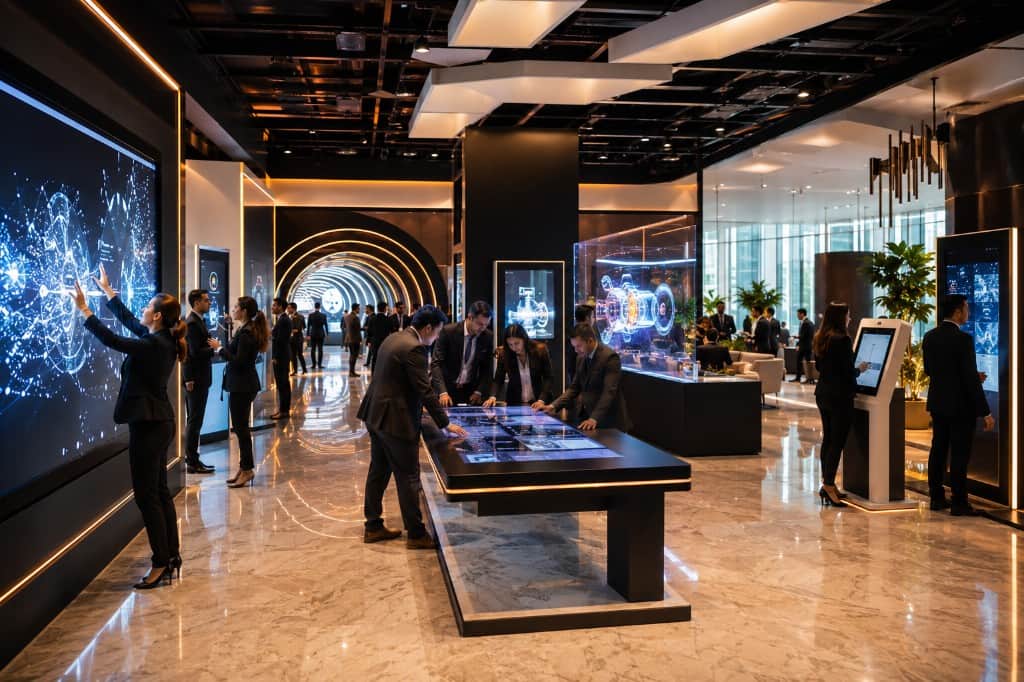
Building presence at a mixed four-day show requires a small number of elements that work hard for both audiences rather than a long list that serves neither. Begin with a single anchor that is visible from a distance and readable in motion, because in a large hall the competition for a glance is settled at fifteen or twenty metres, not at the stand edge. A tall branded structure, a large screen carrying bold motion content, or a distinctive lit form will do more for your footfall than any amount of detail printed at eye level. The content on that anchor should say what you do in the fewest possible words and should change often enough that somebody passing on day three sees something different from what they saw on day one. Next, choose one participatory element that a stranger can complete in under a minute without instruction. Interactive games, a spin-based reward mechanic, a branded photo experience with instant delivery to the phone, a simple prediction or knowledge challenge with a live leaderboard, or a gesture-controlled screen all perform reliably at this kind of show, because they generate visible activity, and visible activity is the strongest recruiting signal on a crowded floor. People join queues that already exist. The important design constraint is that the participatory element must communicate something about your brand while it entertains, because a game that could belong to any company in the hall will produce a crowd and no recall whatsoever. Tie the mechanic to your product category, your service promise or your brand story so that a visitor leaves having learned something, however small. Third, for the trade audience, keep a proper product and proposition tool available and visible, ideally a touchscreen catalogue or a partnership explainer that lets a distributor or retailer see your full range, your margins structure at a general level, your territory availability and your support model without waiting for a free salesperson. This matters enormously on a busy consumer-heavy floor, because a serious business visitor who cannot get attention within a minute or two will simply leave, and you will never know they came. Fourth, connect everything to a single data capture layer so that every interaction, whether it was a game, a catalogue session or a sampling moment, produces a record with a category tag attached, allowing you to separate consumers from trade prospects cleanly after the show rather than sorting through a mixed pile of forms. Fifth, if you have the budget and the organiser permits it, a small satellite presence in a second hall, even a compact branded touchpoint with a screen and one staff member, can meaningfully extend reach at a multi-hall show and act as a feeder to your main stand. Nebuloid designs these layers to share one visual system and one content pipeline, so the anchor screen, the participatory element, the catalogue and any satellite touchpoint all look and sound like the same brand, which is what turns scattered activity into a presence people remember when they leave the venue.
A four-day show is an endurance event, and the exhibitors who perform well on 14 August are the ones who planned for fatigue before 11 August began. Crew rotation is the first and most neglected element of that plan. A team that works four full days without relief will be visibly flat by the third afternoon, and stand energy is contagious in both directions, so build a rota with genuine breaks, bring at least one extra person beyond the minimum, and schedule your strongest people into the peak windows rather than spreading everyone evenly. Peak windows at a mixed trade and consumer show are predictable enough to plan around, with business visitors generally arriving earlier in the day and consumer traffic building through the late afternoon and evening, and the weekend portion of the run typically producing the heaviest and least commercial crowds. Match your staffing and your stand mode to those rhythms, keeping senior commercial people available in the quieter business hours and putting your most energetic hosts on the front edge when the crowd thickens. Content refresh is the second discipline. Screen content that has looped identically for four days becomes invisible to staff and repeat visitors alike, so prepare at least two or three variations, change them daily, and use the change as a reason to re-engage anybody who has passed before. Maintenance is the third. Four days of continuous public use is genuinely hard on hardware, so build in a short opening routine each morning to test every screen, sensor, tablet and speaker before doors open, keep spare cables, chargers, a spare media player and cleaning supplies on the stand, and assign one named person responsibility for the technology rather than leaving it to whoever notices a problem first. Assume the hall network will be congested, particularly during peak hours, and ensure every interactive element runs offline and stores its data locally with later synchronisation, because a queue collapsing because a screen is waiting for a server is an avoidable and very public failure. Review data each evening rather than waiting for the end of the show, because four days gives you three genuine opportunities to correct course. Look at how many people participated, how many produced usable contact records, what proportion were trade rather than consumer, which hours were strongest and which content variation performed best, and change something concrete the next morning. Housekeeping matters more than people expect over a long run, so reset the stand fully each night, restock samples and giveaways, clear accumulated clutter from behind counters, and start each day looking as sharp as you did on the first morning. After the show, split your captured contacts by category before you write a single message, because sending a distributor enquiry the same note as a consumer prize entrant wastes both. Contact trade leads within the first working week with a specific reference to what they engaged with, and treat the consumer list as a longer-term audience for your own channels. Finally, record what you learned about placement, timing and content while it is fresh, because the same halls, the same rhythms and the same audience mixture will be waiting at the next edition, and an exhibitor who arrives with last year notes has a real advantage over one who arrives with only a budget.