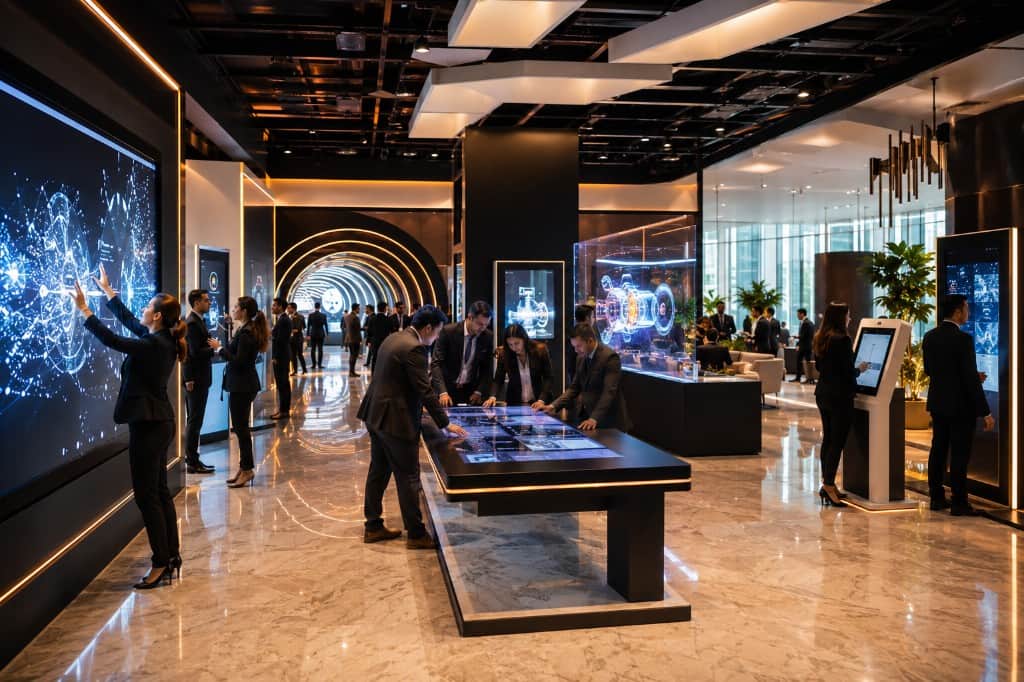

Media Expo New Delhi 2026 takes Halls 4GF and 5GF at Bharat Mandapam from 16 to 18 September, and it is the one show in the Delhi NCR calendar where your stand is not merely a container for your pitch, it is the pitch. Everybody walking these aisles works in visual communication. Sign makers, commercial printers, fabricators, LED and digital signage integrators, out of home media operators, branding agencies, event production companies and in house marketing teams spend their working lives specifying substrates, judging print quality, evaluating finishing and pricing installation. They will notice your banding, your seams, your colour consistency, your lamination edge, your lighting temperature and whether your fascia is sagging by the afternoon of the second day. A generic shell scheme stand at this particular show does not read as neutral, it reads as an admission. The compensating advantage is that a properly executed stand here delivers evidence rather than argument, which is a far more efficient way to sell. The two ground floor halls change the practical planning as well. Ground floor allocation means heavy machinery is viable, freight access is more straightforward and casual footfall is substantially higher than in an upper hall, so you will get more walk past traffic and more of it will be genuinely relevant. It also means noise. Halls filled with running printers, routers, laminators and cutting equipment generate a sound floor that makes normal conversation difficult, and if your plan involves detailed technical discussion you need either an enclosed area or a stand position that gives you some acoustic distance. The audience arrives with three broad intentions that should map directly onto your layout. Some are buying capital equipment and want to see the machine running, hold the output, ask about consumable cost per square foot, service response time and financing. Some are buying materials and consumables and want to touch, flex, weather test and compare against what they currently use. Some are buying services, looking for a fabrication or print partner who can execute a national rollout reliably, and they want evidence of capacity, project management and past work at scale. Trying to serve all three with one undifferentiated stand produces a crowd of people looking for someone to talk to. The three day rhythm is worth planning for as well. The sixteenth of September brings inaugurations, industry associations and a broad browsing crowd. The seventeenth is usually the strongest trading day, and it is when your senior technical and commercial people need to be physically present. The eighteenth thins out in the afternoon, but the visitors who return on a final day are frequently the ones closing a decision, so keeping a demonstration schedule running until the last hour rather than winding down early is often where the best orders of the show appear. Because this audience can produce most of what it might otherwise commission, the temptation is to build the stand in house, and that is frequently the right decision commercially. The risk is that a stand produced by a busy production team in the gaps between paying jobs arrives half finished, and in Halls 4GF and 5GF that is visible to everybody. Treat your own stand as a real project with a brief, a budget, a schedule and a named owner, and finish it a week before 16 September rather than the night before.
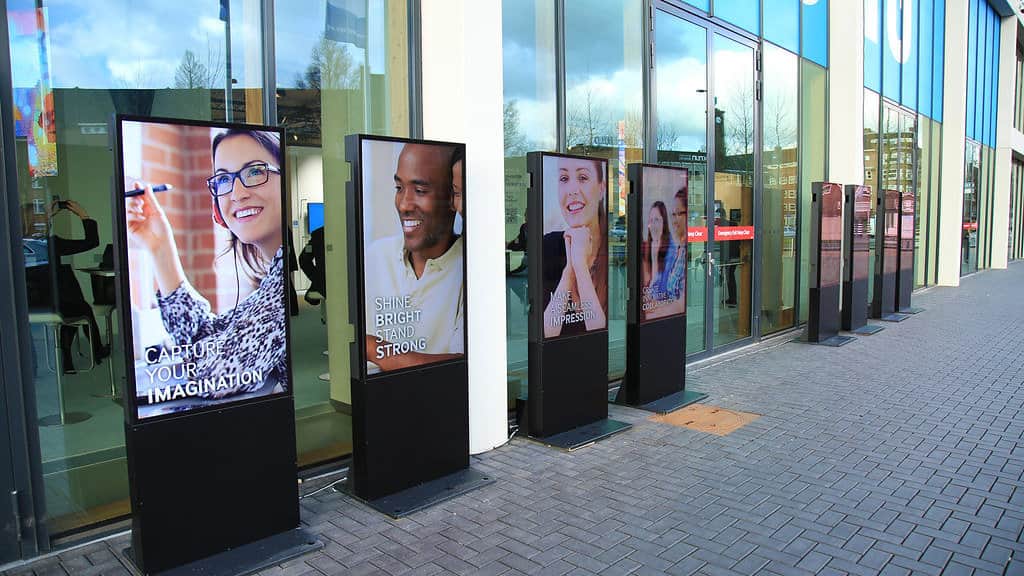
The core mechanic at Media Expo is demonstration, and demonstration works best when it is scheduled rather than continuous. A machine that runs all day becomes background noise, while a machine that runs to an announced timetable creates anticipation, gathers a crowd and gives your team a natural moment to qualify people. Publish a demonstration schedule on your stand and on the aisle facing signage, run each session for eight to twelve minutes, and structure it around a real job rather than a test pattern: take a brief, produce the piece, finish it, and hand it to a visitor. The finished object is the argument. Build a material touch library alongside it, because in this industry decisions are made through the hands. Mount substrates, films, fabrics, rigid boards, laminates and inks in a rack that invites handling, label each with weight, thickness, indoor or outdoor rating, expected lifespan and indicative cost, and let people flex, scratch and compare. This is a low cost, high credibility installation that most exhibitors either skip or execute badly with samples glued behind acrylic where nobody can touch them. Comparison is the second powerful mechanic. A wall showing the same artwork produced through three different processes, with honest cost and durability figures beneath each, answers the question buyers are silently asking, and the honesty is what makes it persuasive. Where the technology genuinely warrants it, add a controlled environmental demonstration, an accelerated fade or abrasion rig for outdoor media, or a side by side of laminated and unlaminated output after simulated exposure. Digital tools have a real role here, provided they solve a buyer problem rather than decorate the stand. A cost per square foot calculator on a tablet, where a visitor enters their monthly volume and typical job profile and receives a comparison against their current setup, converts extremely well because it produces a number the buyer can take back to their own accounts. A configurator that lets a visitor design a simple sign, choose materials and finishes, and see indicative pricing and lead time does the same work for the services audience. For LED and digital signage exhibitors, a content management demonstration where a visitor pushes their own image to a screen in real time is far more memorable than a looping showreel. Personalised on the spot production is the strongest giveaway strategy available at this show: print a visitor name onto a sample, a badge, a sticker set or a small board while they wait, because it demonstrates speed, quality and workflow simultaneously, and the visitor carries the evidence out of Hall 4GF or 5GF. Around all of this, protect one enclosed area with acoustic treatment and seating for pricing and contract discussion, and keep your own stand graphics immaculate, well lit, colour matched and structurally tight, since every visitor is grading them whether or not they say so. It is worth walking your own stand at the end of each day with a critical eye, checking for lifting laminate edges, fingerprints on acrylic, scuffed floor graphics and any panel that has drifted out of alignment, and fixing all of it before the doors open the following morning.
Converting Media Expo traffic depends on recognising that the sales cycles behind these three days differ enormously and instrumenting accordingly. A consumables order can close on the floor. A capital equipment purchase usually takes weeks or months, involves financing, site preparation, training and service commitments, and is decided by more than one person. A national fabrication or rollout contract runs on tender timelines and procurement processes that have nothing to do with exhibition energy. Your lead capture should therefore record purchase type, current equipment or supplier, monthly volume, decision timeline and whether financing is required, and your follow up should be sequenced against those timelines rather than sent as one undifferentiated mailer on the Monday after the show. For equipment prospects, the most valuable follow up asset is the sample produced during their demonstration, so keep it, label it with their name and the machine settings, and send it with the quotation. For the service and fabrication audience, the credible follow up is a capability document with real project references, timelines, quality control processes and installation coverage across Delhi NCR and beyond. Dealer and channel recruitment deserves its own track entirely, with a separate conversation space and a separate document set, because a prospective dealer asks about territory, margin, training and support, not about specification. Operationally, Halls 4GF and 5GF reward early planning because machinery makes everything harder. Confirm the actual weight and footprint of every machine against permitted floor loading, book freight access and forklift support for the move in on the days before 16 September, and verify your power sanction against real running load rather than nameplate optimism, including three phase requirements, compressed air where needed and any extraction for cutting or curing. Ventilation and fume management for solvent or UV processes must be agreed with the organisers in advance, not negotiated on site. Noise is a shared problem in these halls, so keep demonstration audio directional and modest, since the exhibitor who turns the volume up is usually the one whose neighbours stop cooperating. Plan consumable stock for three days of continuous demonstration, plus a margin, because running out of media on the afternoon of the seventeenth wastes the best hours of the show. Assign a person to housekeeping, because print halls generate offcuts, packaging and dust at a rate that will overwhelm a stand by mid afternoon, and a cluttered stand at a visual communication show is a self inflicted wound. Finally, treat the output of these three days as a content asset. Film your demonstrations properly on the morning of 16 September while everything is clean, photograph the finished pieces, and capture short testimonials from visitors handling your samples. That material will carry your marketing through the following quarter, and for exhibitors already planning the Delhi Jewellery and Gem Fair in Halls 1GF to 5GF from 25 to 27 September, it doubles as a portfolio of exactly the kind of retail and display work that audience buys, filmed and photographed in a venue every prospective client already recognises.