
Digital twins for events are changing how businesses visualize, plan, and manage modern event spaces. A digital twin is a virtual representation of a physical venue or environment that allows organizers to explore layouts, understand spatial arrangements, and evaluate different planning options before an event takes place. From corporate conferences and trade shows to exhibitions and brand activations, digital twins can help teams understand how an event space may function in practice. Instead of relying entirely on static floor plans, organizers can use detailed virtual models to explore stages, exhibition booths, seating areas, and visitor pathways. Businesses interested in innovative event solutions can explore Nebuloid Tech Studio’s experiential technology solutions to understand how digital environments can support engaging event experiences.
How Digital Twins Improve Event Planning
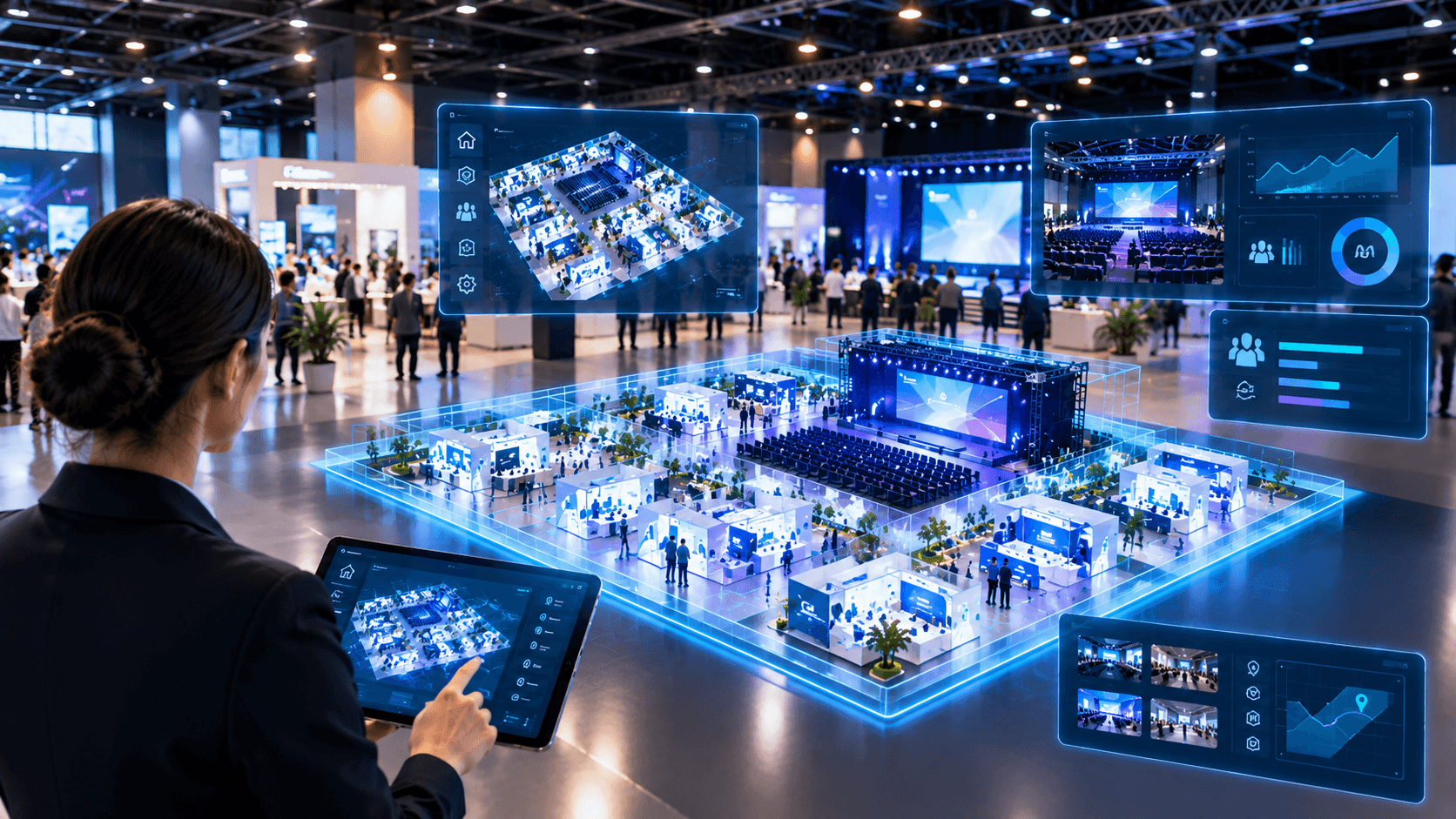
Planning a large event involves coordinating multiple elements, including venue layouts, technical equipment, exhibitor requirements, stage placement, and attendee movement. Digital twins for events can bring these elements together in a virtual environment, making the planning process easier to visualize. Organizers can review booth locations, test alternative seating arrangements, examine circulation routes, and identify potential space limitations before physical installation begins. This can help teams communicate ideas more clearly with clients, vendors, and event partners. Virtual models can also support planning discussions when changes are needed, allowing stakeholders to compare possible layouts before committing to a final setup. For exhibitions with multiple brands and activity zones, these models can complement exhibition booth and event experience solutions, helping teams coordinate different elements within a shared event environment.
Creating More Engaging Visitor Experiences
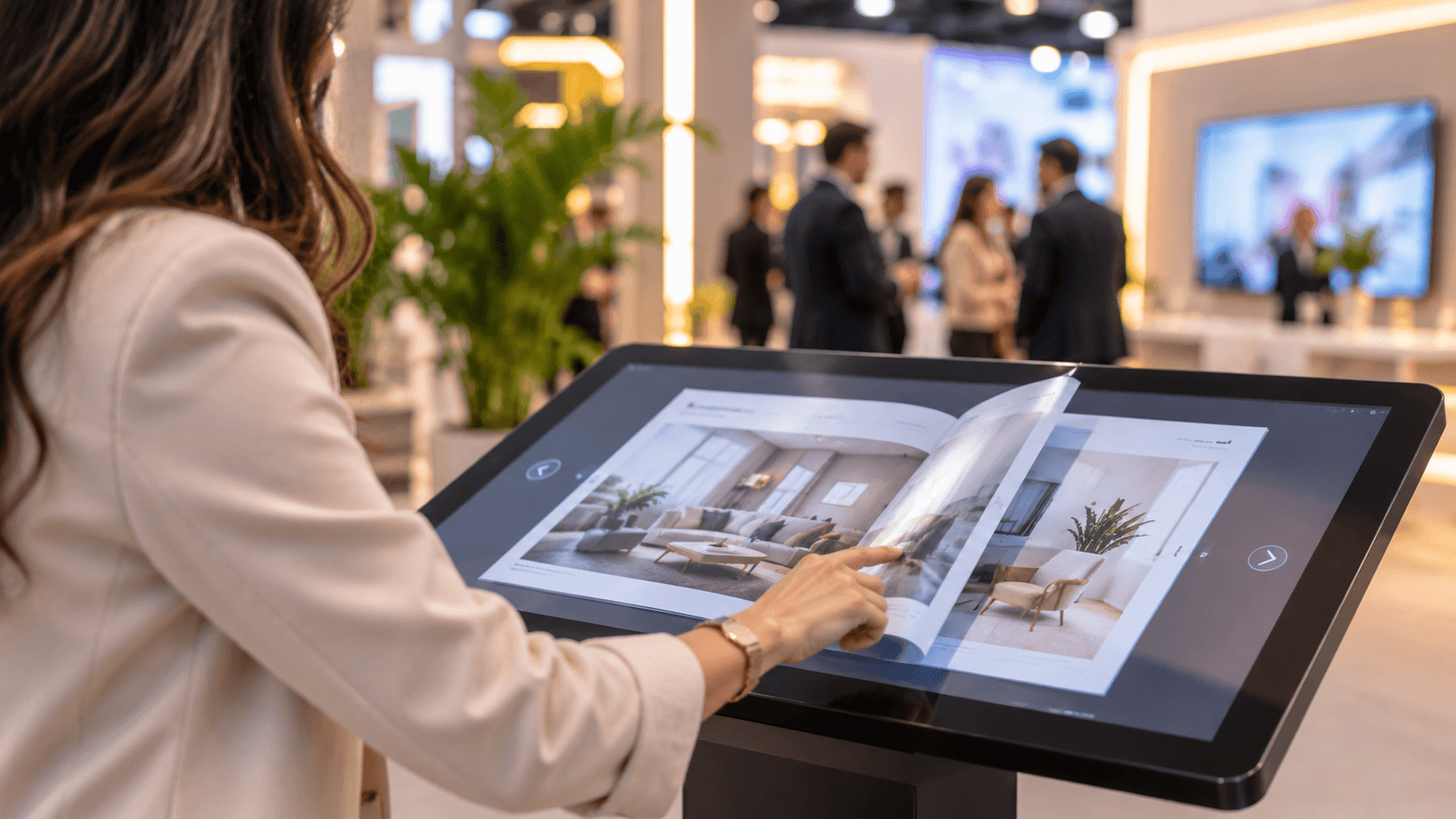
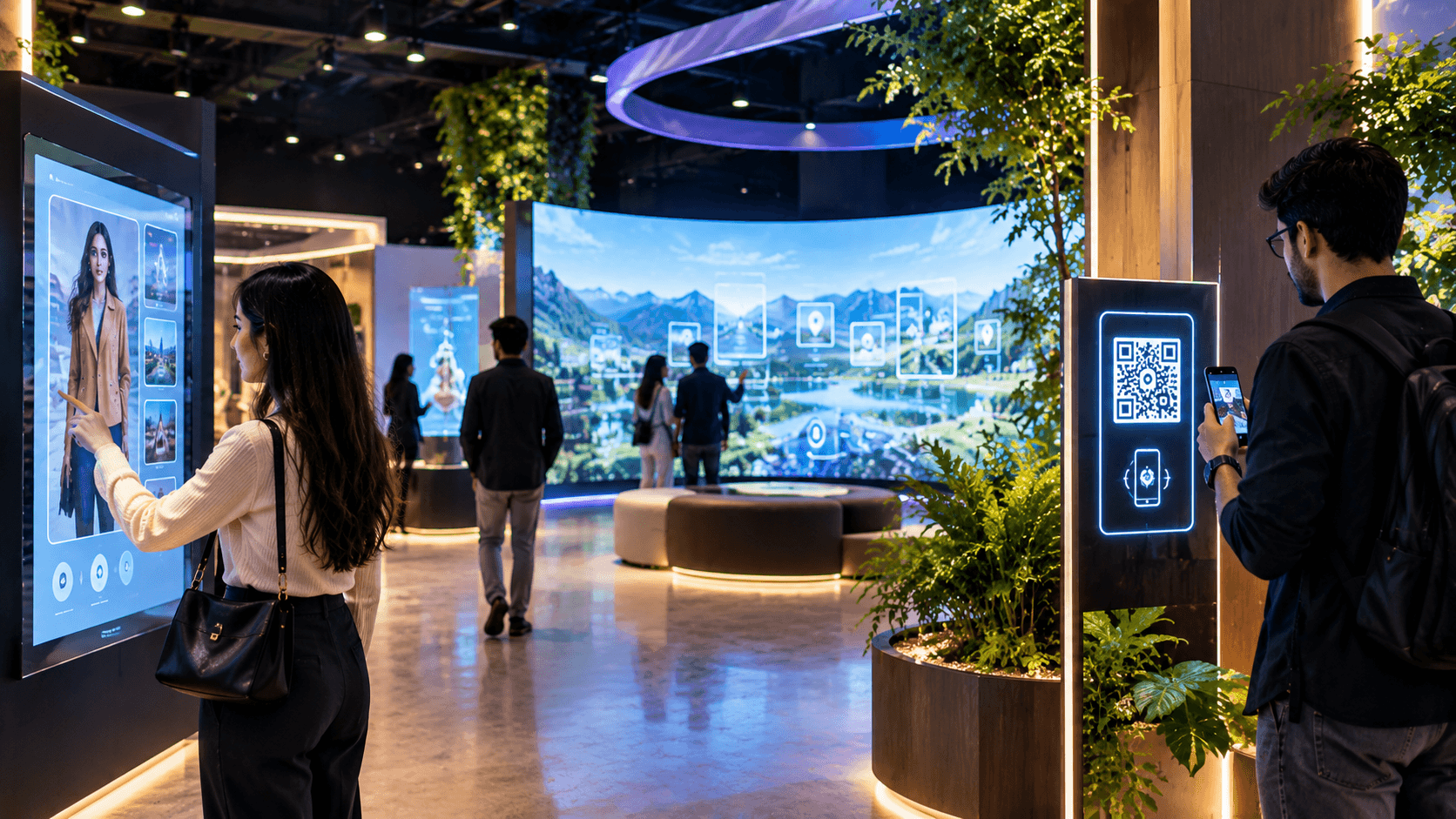
Digital twins can also help improve the visitor journey by making complex event venues easier to understand. A virtual representation of an exhibition hall or conference centre can help attendees preview the venue, discover important areas, and understand how different zones are connected. Depending on the implementation, visitors may be able to explore exhibition spaces digitally, locate specific booths, or access information about stages, meeting rooms, and facilities. When connected with interactive displays, touchscreen kiosks, or digital navigation systems, a digital twin can become part of a broader visitor information experience. For example, attendees could use a touchscreen interface to explore a venue map or find a particular destination. Businesses can explore related technologies through interactive touchscreen kiosks and venue navigation technology. These solutions can make event information more accessible while helping visitors move through large spaces with greater confidence.
Practical Applications Across Events and Exhibitions
Digital twins for events can be applied to a range of environments, including trade shows, corporate conferences, product launches, convention centres, and experiential brand activations. Before an event, planners can use virtual models to review venue layouts, coordinate exhibitor requirements, and communicate design concepts with stakeholders. During an event, more advanced systems may connect the virtual model with operational information, such as occupancy levels, equipment status, or visitor movement, provided suitable sensors and integrations are available. After the event, collected data may help organizers review how the space was used and identify opportunities for future improvements. Digital twins can also complement event reporting tools by bringing relevant operational information into a more understandable visual environment. For organizations seeking better visibility into event activities, an event intelligence dashboard can be a related component of a wider event technology strategy. The exact benefits depend on the model’s capabilities, the quality of its data, and the objectives of the event team.
The Future of Digital Twins for Events
As event technology continues to develop, digital twins may play a growing role in connecting venue design, event operations, and visitor engagement. However, not every virtual venue model is a complete digital twin. A basic 3D model may primarily support visualization, while a more advanced digital twin can incorporate updated information from the physical environment to reflect changing conditions. Understanding this difference helps businesses choose technology that matches their actual needs and budget. Event organizers should begin by identifying their main priorities, whether that means improving space planning, coordinating vendors, supporting visitor navigation, or understanding venue operations. They can then determine which features are necessary and whether integrations with other event systems would provide meaningful value. By combining thoughtful planning with suitable digital tools, businesses can create better-organized events and more accessible visitor experiences. To explore additional approaches to interactive environments and connected event experiences, visit Nebuloid Tech Studio’s digital experiences.