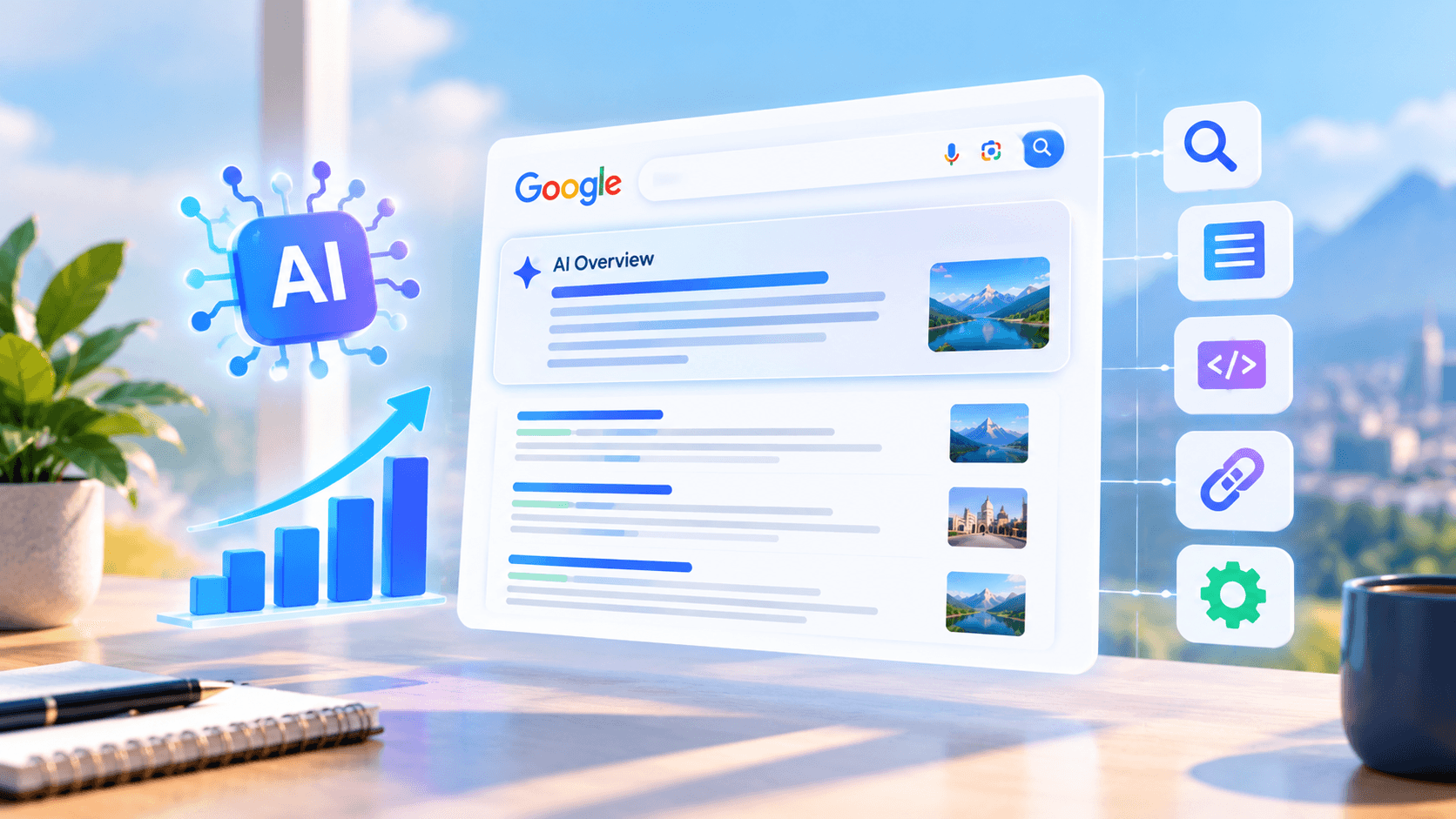

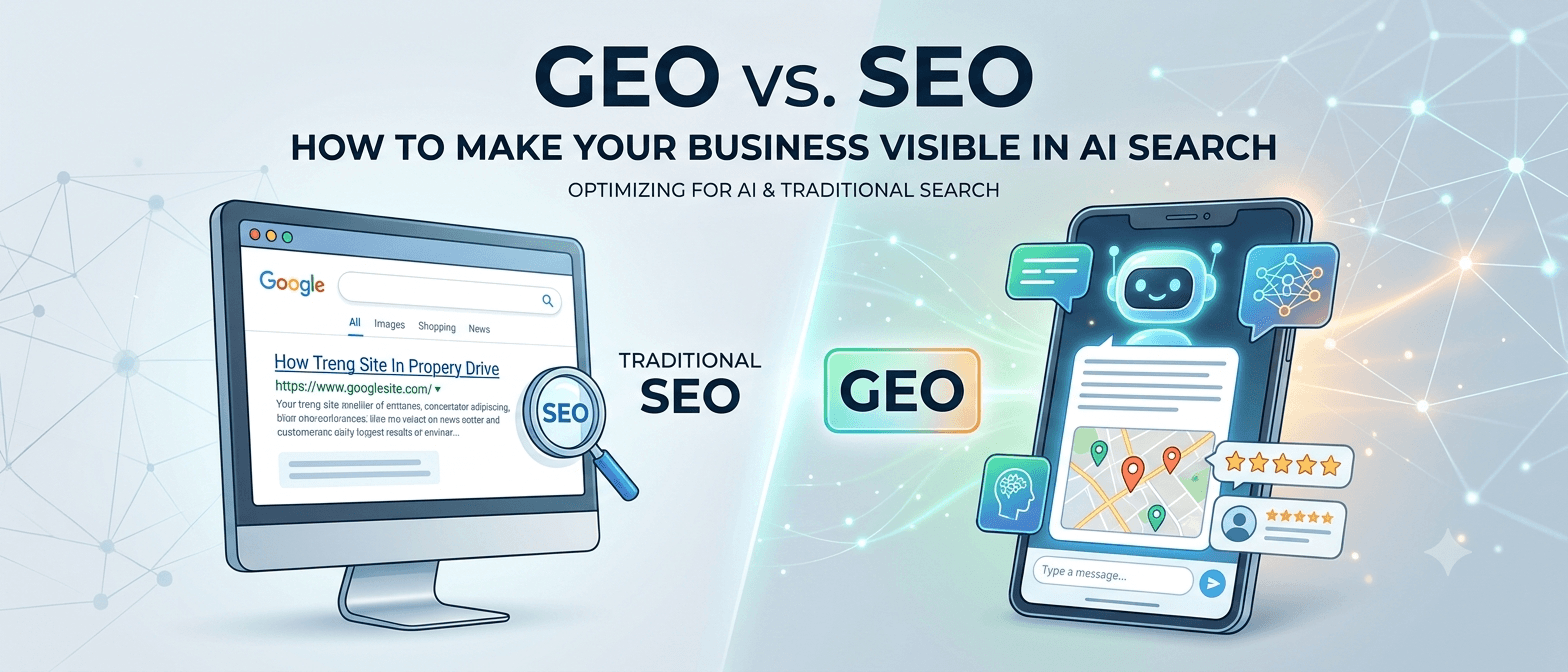
Search technology is evolving rapidly, changing how people discover businesses, products, and services online. Traditional search engines display a list of websites, while AI-powered search tools can generate direct answers using information from multiple sources. To remain visible in this changing digital landscape, businesses need to understand both Search Engine Optimization (SEO) and Generative Engine Optimization (GEO).
What Is SEO?
Search Engine Optimization (SEO) is the process of improving a website's visibility in traditional search engine results. It involves optimizing website content, keywords, page speed, technical performance, and backlinks to help search engines understand and rank web pages.
Effective SEO helps businesses attract relevant organic traffic, improve their online presence, and connect with potential customers actively searching for their products or services. A well-optimized website also provides a better user experience through clear navigation, useful information, and mobile-friendly design.
What Is GEO?
Generative Engine Optimization (GEO) focuses on improving the likelihood that a business's content will be understood, referenced, or cited by AI-powered search experiences. These may include AI-generated search summaries, conversational search tools, and answer engines.
GEO involves creating helpful, accurate, and clearly structured content that directly answers users' questions. Well-organized information, relevant expertise, trustworthy sources, and consistent business details can make content easier for AI systems to interpret. However, appearing in AI-generated answers is not guaranteed.
Key Differences Between GEO and SEO
- Main goal: SEO aims to improve visibility in traditional search results, while GEO aims to improve visibility in AI-generated answers and responses.
- Content approach: SEO emphasizes search intent, keyword relevance, technical optimization, and website authority. GEO places additional emphasis on direct answers, clear explanations, contextual relevance, and information that AI systems can interpret.
- Visibility: SEO commonly focuses on search rankings and organic clicks, whereas GEO also considers whether a business is mentioned or cited in AI-generated responses.
- Performance measurement: SEO can be measured through rankings, impressions, clicks, and organic traffic. GEO may also be assessed through AI citations, brand mentions, referral traffic, and visibility across relevant AI search experiences.
Why Businesses Need Both GEO and SEO
SEO and GEO should be viewed as complementary strategies rather than competing approaches. Many AI-powered search experiences rely partly on information available across the web, making a technically sound website and useful content valuable for both approaches.
Businesses that combine these strategies can strengthen their digital presence, answer customer questions more effectively, and adapt to changing search behavior. Maintaining accurate information, demonstrating expertise, and publishing original content can also help build trust with potential customers.
How to Improve Your Business Visibility in AI Search
1. Create Helpful, Question-Based Content
Identify the questions your customers frequently ask and create content that answers them clearly. Use informative headings, concise explanations, and practical examples. Frequently asked questions, service pages, and detailed guides can help users find relevant information without unnecessary complexity.
2. Strengthen Your Website's SEO Foundation
Ensure your website loads quickly, works well on mobile devices, uses secure HTTPS connections, and has a logical structure. Optimize page titles, meta descriptions, URLs, internal links, and relevant keywords. A technically accessible website gives search engines a better opportunity to discover and understand your content.
3. Demonstrate Experience and Credibility
Publish accurate information that reflects your business's knowledge and expertise. Support important claims with reliable sources where appropriate, keep service details updated, and include relevant company information. Original insights and useful examples can make your content more valuable than generic, repetitive material.
4. Structure Content for Easy Understanding
Organize articles with descriptive headings, short paragraphs, bullet points, and clear definitions. Explain technical concepts in simple language and address related questions within the same page when useful. Structured content benefits readers and can help automated systems interpret the relationships between different topics.
5. Maintain Consistent Business Information
Keep your business name, contact information, services, and location details accurate across your website and relevant online profiles. Consistent information helps potential customers understand what your business offers and where it operates. Local businesses should also maintain updated business listings and encourage genuine customer reviews.
6. Measure and Improve Performance
Use analytics and search performance tools to monitor impressions, organic traffic, engagement, conversions, and customer inquiries. Where practical, track relevant brand mentions or citations in AI-generated answers. Review performance regularly and update content based on customer needs, changing search behavior, and measurable results.
How Nebuloid Tech Studio Can Help
Building a strong online presence requires a combination of website development, technical optimization, useful content, and digital marketing. Nebuloid Tech Studio helps businesses strengthen their digital foundations through website solutions and digital experiences designed around business goals.
By combining an SEO-friendly website with a thoughtful content strategy, businesses can improve discoverability, communicate their value more clearly, and prepare for evolving search experiences. Explore our digital capabilities to learn more about our services.
Conclusion
GEO and SEO serve different but connected purposes in modern digital marketing. SEO helps businesses improve their presence in traditional search results, while GEO focuses on making their information useful and accessible within AI-generated answers. Neither strategy guarantees a particular ranking, mention, or citation.
The most sustainable approach is to create accurate, valuable content, maintain a fast and accessible website, demonstrate credibility, and monitor performance over time. By investing in both GEO and SEO, businesses can build a stronger foundation for visibility as online search continues to evolve.