
Understanding Interactive Exhibition Technology Trends in 2026
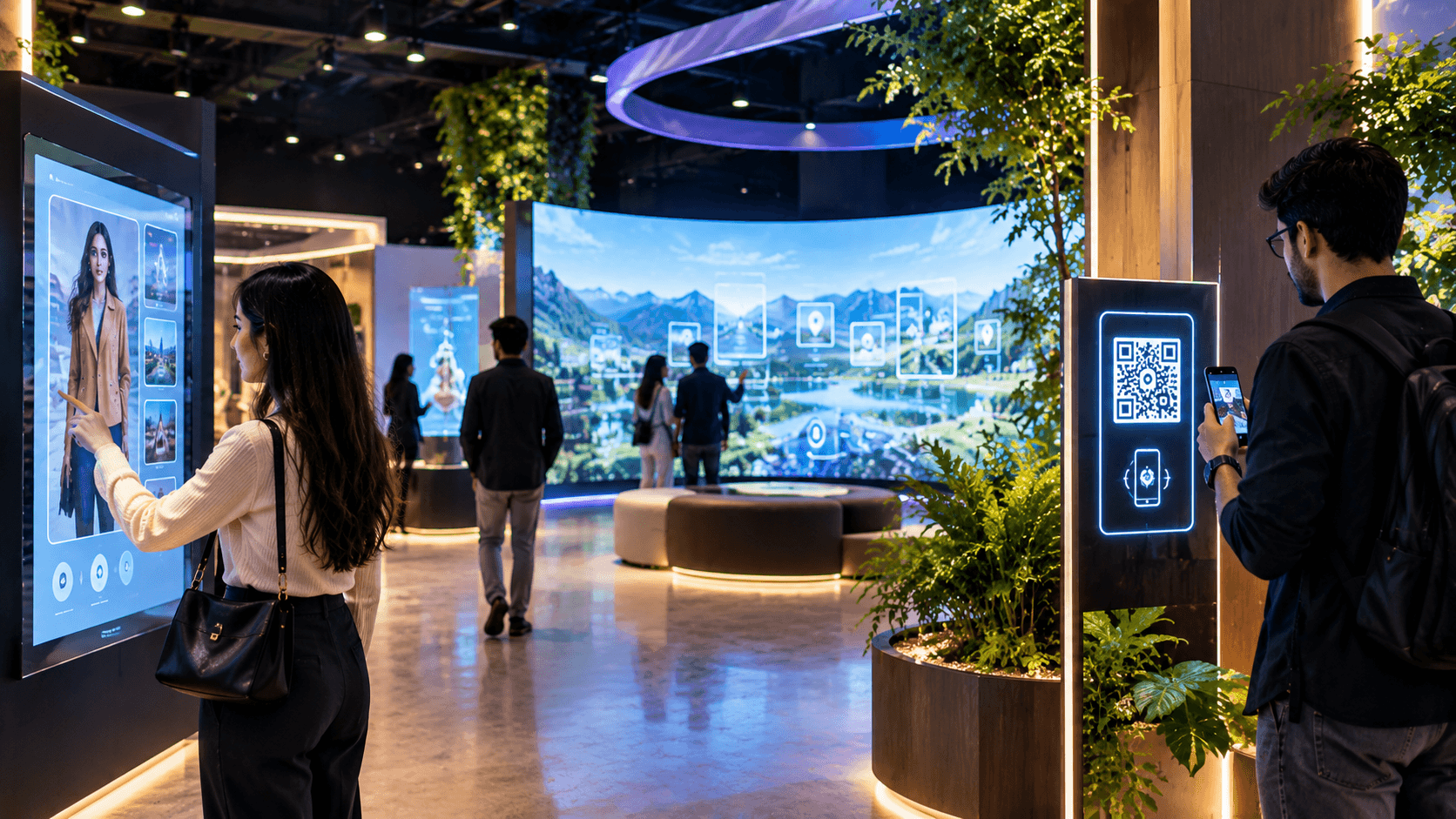
Interactive exhibition technology is changing how brands connect with visitors at exhibitions, trade shows, and corporate events. In 2026, businesses are increasingly exploring touchscreen kiosks, artificial intelligence (AI), immersive digital installations, and virtual reality (VR) to create engaging brand experiences. Instead of simply viewing displays, visitors can interact with content, explore products, and participate in digital activities. These experiences can help businesses communicate complex ideas, attract attention, and make their exhibitions more memorable. Explore interactive installations by Nebuloid Tech Studio to discover how digital technology can enhance visitor experiences.
Touchscreen Kiosks and Interactive Displays
Touchscreen kiosks are useful tools for presenting product information, digital catalogues, service details, and interactive demonstrations. Visitors can browse information at their own pace, compare features, and explore offerings without waiting for a staff member to guide them through every step. Interactive displays can also help exhibitors organise large amounts of information in a simple and accessible format. Businesses should consider screen placement, navigation, readability, and ease of use when planning these experiences. Discover touchscreen kiosk solutions that can support interactive presentations and exhibition engagement.
AI-Powered Experiences and Personalisation
Artificial intelligence can introduce new ways for visitors to interact with exhibition content. Depending on the system, AI-powered experiences may answer questions, guide product discovery, provide tailored information, or support conversational demonstrations. These features can help brands deliver more relevant interactions while giving visitors different ways to explore their offerings. However, AI should serve a clear purpose rather than being included only because it is a new technology. Businesses should consider audience needs, privacy, accuracy, and the overall visitor journey before implementing AI. Learn more about AI-powered experiences that can make brand interactions more dynamic.
Immersive Technology and Interactive Games
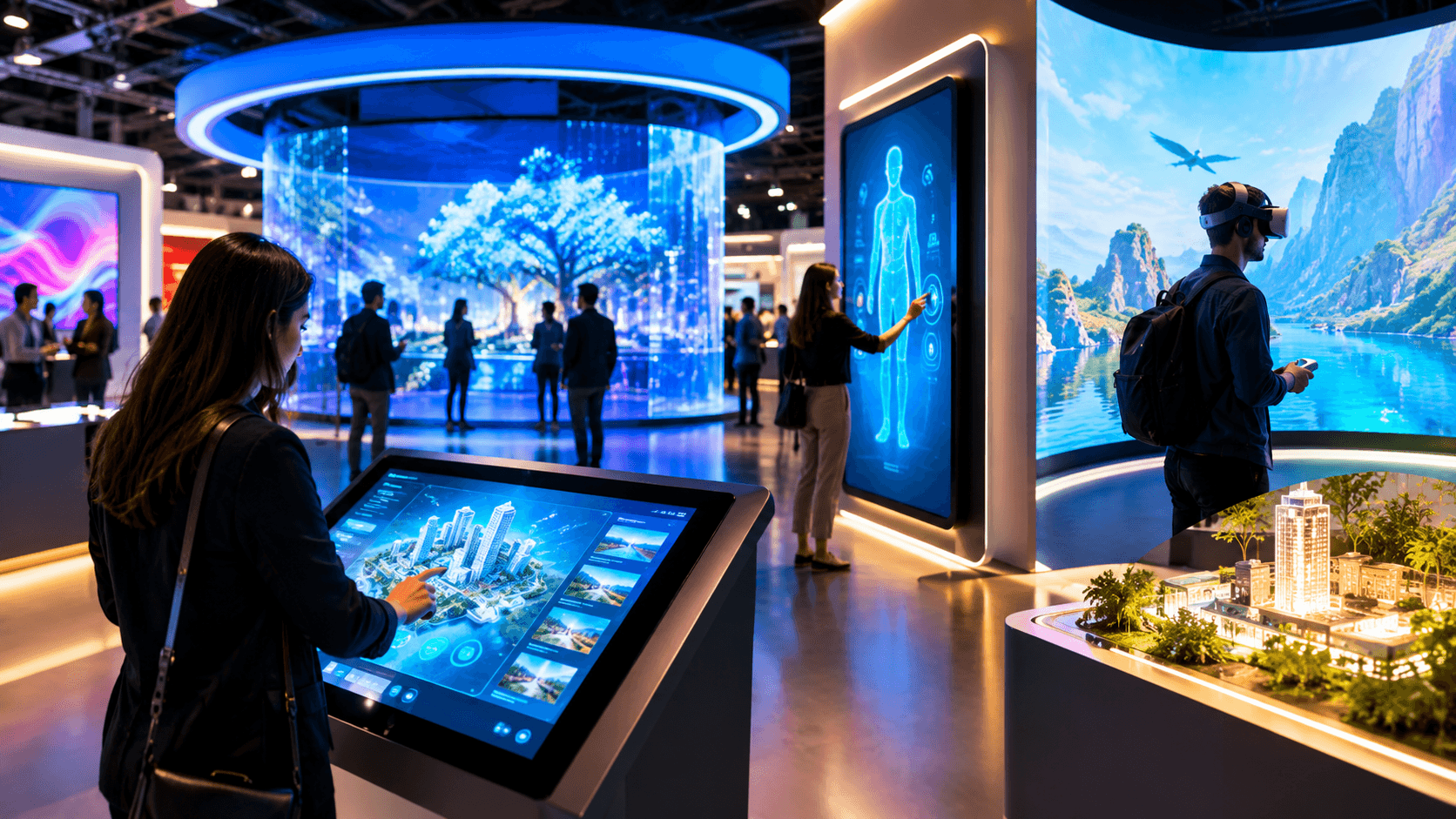
Immersive technology can transform an exhibition into an experience that visitors actively explore. Virtual reality, interactive projections, digital environments, and motion-responsive installations can help communicate ideas in engaging visual formats. For example, a brand may use a virtual environment to demonstrate a product application or an interactive display to explain a complex process. Interactive games can also encourage participation through challenges, quizzes, and rewards. The most suitable approach depends on the exhibition's objectives, available space, audience, and budget. Explore interactive gaming experiences to see how participation can become part of an exhibition strategy.
Lead Capture and Exhibition Performance
Attracting visitors is important, but exhibitions can also help businesses build relationships with potential customers. Digital forms, registration screens, and other lead capture tools can make it easier for interested visitors to share their contact details. Businesses should explain why information is being collected, request only necessary details, and handle personal information responsibly. After the event, teams can review available engagement data and enquiries to understand which activities attracted interest. Explore lead capture solutions to learn how digital systems can support prospect information collection and follow-up.
Choosing the Right Exhibition Technology in 2026
The best exhibition technology is not necessarily the most complex or expensive option. Businesses should begin by defining their goals, understanding their audience, and deciding what visitors should learn or do during the experience. Touchscreen kiosks may work well for product exploration, while AI-powered demonstrations can support personalised interactions. Immersive installations and interactive games may be more suitable when the objective is to encourage participation and create memorable experiences. By matching technology to business needs, exhibitors can create experiences that are useful, accessible, and engaging. To explore technology-led solutions for your next exhibition, visit the Nebuloid Tech Studio website.