
India Health 2026 runs from 20 to 22 August in Hall 6, and it is the show on the Delhi August calendar where the usual rules of exhibition engagement need the most careful translation. The people walking that hall are hospital purchase committee members, biomedical engineers responsible for uptime and service contracts, consultants and department heads who will specify a device but not sign the cheque, diagnostic laboratory owners comparing analysers and consumable costs, distributors and dealers hunting territory rights, hospital administrators evaluating information systems and facility solutions, and officials from public health programmes. This is a low-volume, high-value audience, and the arithmetic that governs a consumer activation collapses here: a stand that entertains eight hundred people and speaks properly to none of them has failed, while a stand that holds twenty-two serious clinical and procurement conversations across three days can pay for itself several times over. Nebuloid Tech Studio therefore designs India Health activations around credibility and clarity rather than spectacle. A clinician who has spent fifteen years in an operating theatre will forgive an unpolished screen but will never forgive an inaccurate anatomical model, an exaggerated performance claim, or a host who cannot answer a technical question, and a biomedical engineer will judge your reliability by how well the demonstration unit is maintained on your own stand. Hall 6 as a single concentrated hall creates its own dynamic. Traffic is denser per square metre than in a multi-hall layout, aisles feel busier, and background noise builds quickly, which makes acoustically considered design more important than loud design: recessed demonstration zones, seating that faces away from the aisle, headphone-based audio for anything narrative, and at least one semi-private corner where a serious discussion about tender specifications or annual maintenance contracts can happen without shouting. The three days have distinct characters. The twentieth of August brings the most focused trade and institutional visitors, the twenty-first is typically the busiest and the most fragmented, and the twenty-second falls on a Saturday, which tends to bring more practising clinicians who could not leave a weekday clinic along with a wider general audience. Plan staffing and content depth against that shift rather than running one script for all three days. Two constraints deserve explicit mention because they are routinely ignored. First, hygiene and touch: a medical audience notices shared surfaces, so touchless gesture interaction, individually sanitised headsets, visible wipe protocols, and hand sanitiser at every station are credibility signals as much as safety measures. Second, claims: everything shown on a screen at a healthcare exhibition is a marketing communication, and anything resembling a diagnostic output, an efficacy figure, or a comparative performance claim needs to clear your regulatory and medical affairs review before it is built, not after the graphics are approved. Exhibitors who accept these constraints early find that they sharpen the work, because an activation that survives clinical scrutiny is also the activation that a purchase committee remembers when the tender document is finally drafted several months after the hall has been cleared.
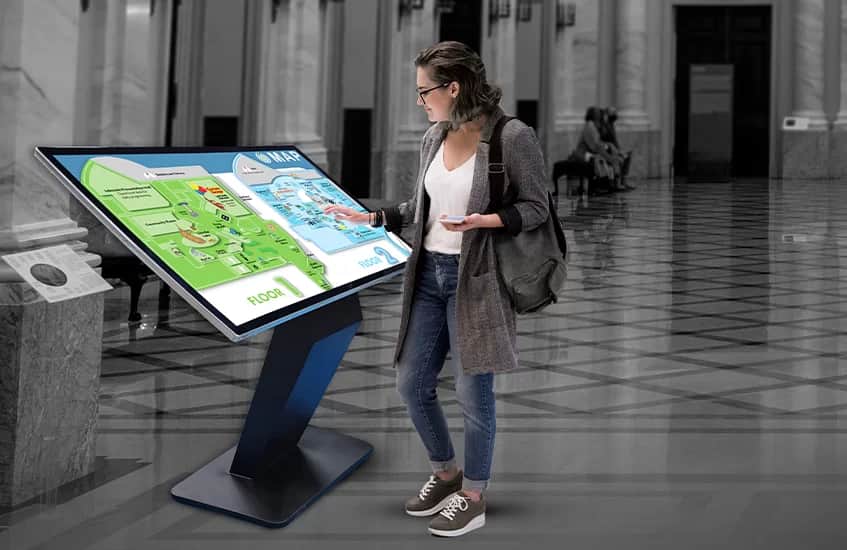
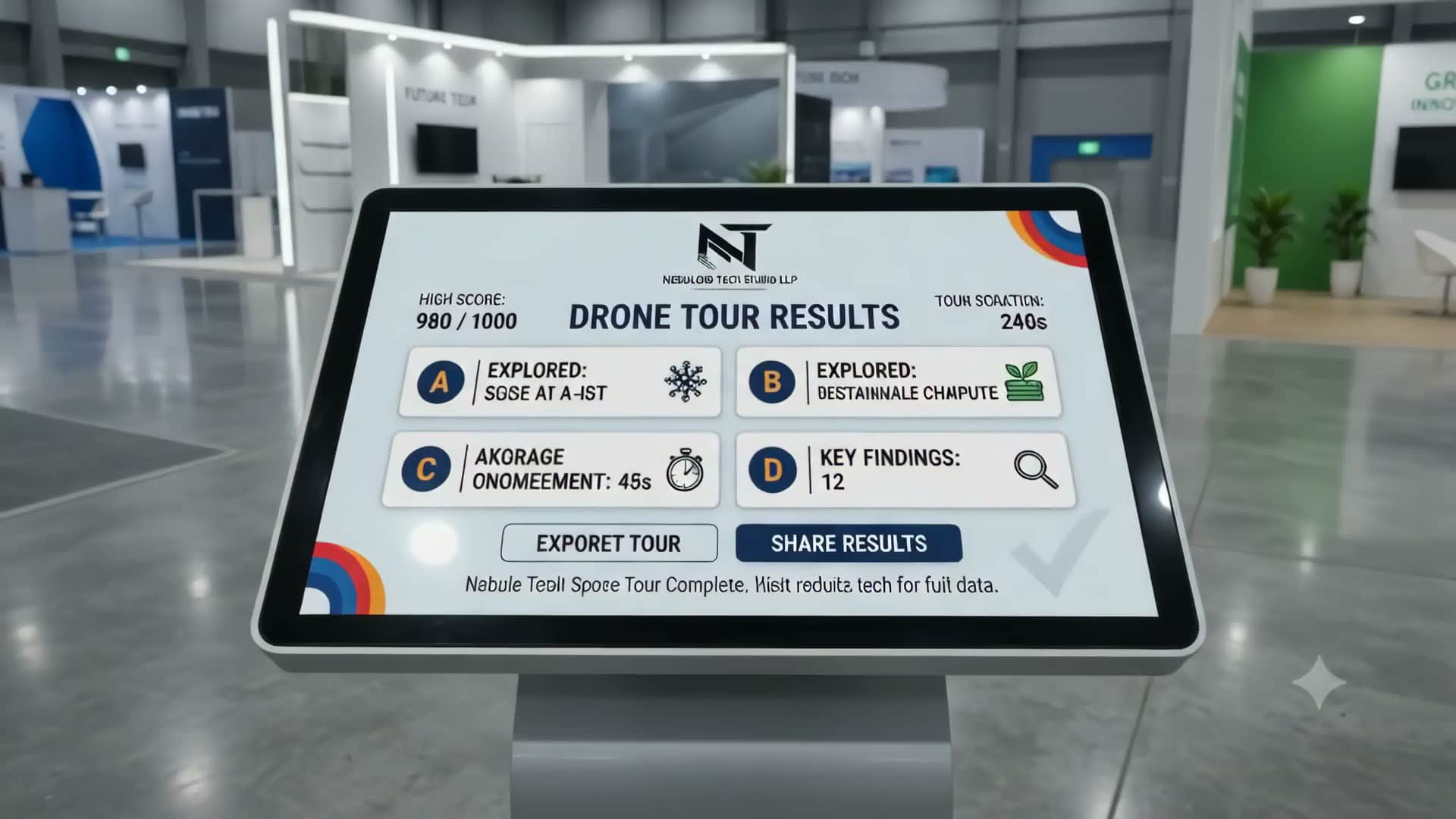
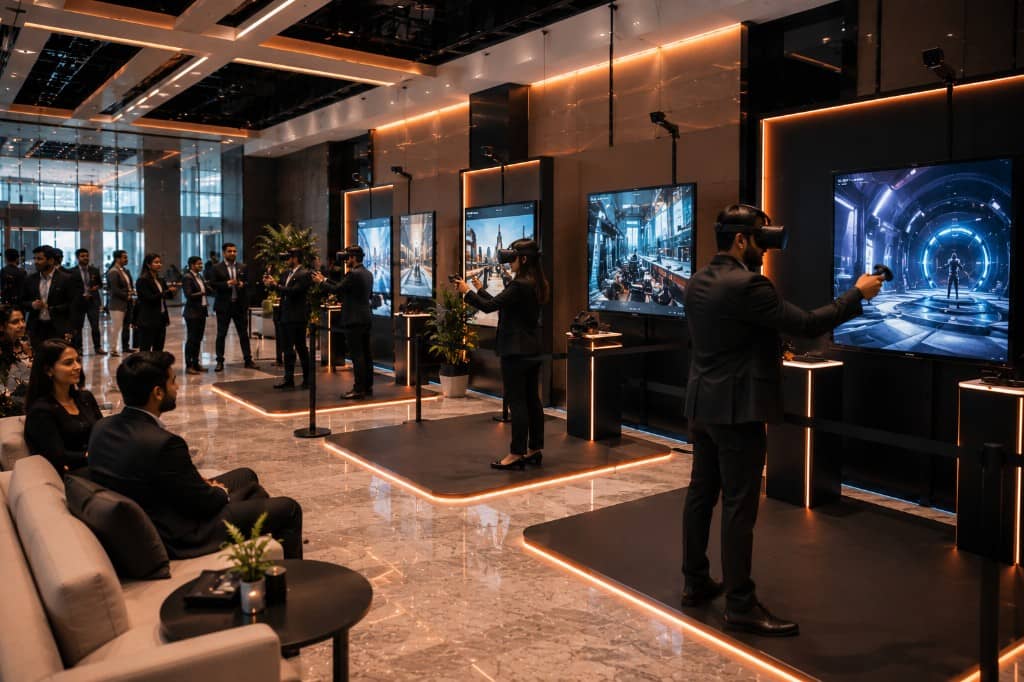
The engagement formats that work at India Health are the ones that let a clinical or technical visitor understand a device, a workflow, or a service model faster than a brochure or a booth conversation would allow. The most consistently effective installation Nebuloid Tech Studio builds for Hall 6 is a device exploration table: a large horizontal touch surface, or a vertical screen paired with the physical unit, where a visitor opens a layered cutaway of the equipment and moves through the chassis, the consumable path, the sensor assembly, the sterilisable components, and the serviceable modules. Biomedical engineers respond to this immediately because it answers the questions they actually carry into a show, which concern spares, service intervals, calibration, and downtime rather than headline features. Augmented reality on a tablet achieves the same result for equipment too large or too costly to ship, letting a visitor walk around a full-scale virtual imaging system, dialysis station, or modular operating theatre on an empty patch of your plot. For hospital solutions, facility, and information systems brands the stronger format is a patient-journey wall, where a visitor follows one case from admission through triage, diagnostics, procedure, ward, discharge, and follow-up, and taps any stage to see exactly where your product removes delay, cost, or clinical risk. This reframes a fragmented product list as a single coherent operational argument, which is precisely how administrators think. Diagnostics exhibitors benefit from a live dashboard demonstration driven entirely by synthetic sample data, showing throughput, turnaround time, quality control flags, and connectivity to the laboratory information system, with a deliberate error introduced so the visitor watches the system catch it. Never populate such a demonstration with real patient records, and label synthetic data clearly on screen. Virtual reality has a genuine role here, but a narrow one: seated, staffed, sanitised, and limited to walkthroughs that cannot be delivered any other way, such as a full modular theatre, an intensive care layout, or a catheterisation laboratory configuration, with a two to three minute ceiling and a screen mirroring the headset view so onlookers stay engaged while one person is inside. Skills-based engagement earns strong clinical dwell when it is honest: a laparoscopic or suturing trainer with a timed accuracy score, an ultrasound probe positioning challenge on a phantom, or a resuscitation compression quality station will draw doctors and nurses who genuinely want to test themselves, and a discreet leaderboard adds friendly competition without turning medicine into an arcade. Distributor and dealer engagement deserves its own quiet kiosk, where a prospective partner can review territory availability, margin structures, training support, and service commitments, then register interest in a structured form. Across every format, three rules hold in Hall 6: keep interaction touchless or visibly sanitised, keep the loop short enough that a consultant with fifteen minutes between sessions can complete it, and make sure a qualified human being with real product knowledge stands immediately beyond the screen, because at a healthcare exhibition the technology should open the conversation and never be mistaken for the conversation itself.
Delivering an India Health activation between 20 and 22 August requires a compliance mindset layered on top of normal exhibition production, and Nebuloid Tech Studio sequences the work accordingly. Begin with written confirmation from the organiser covering hall allocation in Hall 6, stand dimensions and height limits, build and dismantle windows, power sanction, and rules on demonstration equipment, because medical exhibitions often carry additional restrictions on live devices, gas or fluid use, radiation-emitting equipment, and anything requiring institutional clearance. Run every claim through medical affairs and regulatory review before production begins. Any figure, comparison, indication, or output that appears on a screen becomes promotional material, so freeze the copy deck four weeks out, keep an approved source reference for each claim, mark synthetic data visibly as synthetic, and remove anything that could read as a diagnostic result generated for a visitor. Data protection deserves the same seriousness. Collect only the visitor information you genuinely need, state the purpose plainly at the point of capture, record explicit consent, never capture health information about a visitor even in jest, and define retention and deletion timelines before the show rather than discovering them during a later audit. Hygiene is an operational workstream, not a gesture: allocate sanitising supplies per station per day, use disposable or wipeable headset liners, schedule wipe-downs at fixed intervals, keep a visible cleaning routine, and prefer gesture, proximity, or personal-device control wherever a touch surface can be avoided. Technical resilience matters because clinical visitors arrive in short windows and will not return. Specify medical-grade or industrial computers, uninterruptible power supply protection on every show machine, calibrated displays for imaging content where colour and greyscale fidelity carry meaning, and a complete offline build with local data buffering, since venue connectivity will be congested for all three days and a cloud dependency is an avoidable point of failure. Staffing should pair capability with credibility: one trained host per station to pace visitors and capture details, one clinical or application specialist from your own team positioned to receive them, and one technician covering the stand. Rehearse a fifteen-second invitation, a thirty-second qualification covering institution, role, department, procurement stage, and budget cycle, and a clean handover into a seated conversation for anyone who qualifies. Lead capture should be structured for a long healthcare sales cycle, tagging the specific module, device, or workflow each visitor explored, recording the tender or budget timeline they mention, and syncing to the customer relationship system each evening so follow-up reaches them within forty-eight hours with the exact technical documentation they asked to see. Measure what matters at a specialist show: qualified institutional conversations rather than gross footfall, dwell per visitor, distributor registrations, demonstration completions by role, cost per qualified conversation, and day-wise performance across the twentieth, twenty-first, and the Saturday finish. Then treat the build as a reusable clinical communication asset. The device exploration table, patient-journey wall, and walkthrough content produced for Hall 6 can be redeployed at medical conferences, hospital demonstration days, distributor training sessions, and your own experience centre, which is how healthcare marketing teams justify the investment across a full financial year instead of a single three-day exhibition.