
Sanjeevani 2026 runs for only two days, 6 and 7 September, in Hall 2FF at Bharat Mandapam, and that compression should be the first fact that shapes your planning. A two day show in a single first floor hall behaves nothing like a sprawling three day event. There is no gentle first day in which to find your rhythm, no second chance for a visitor who walked past while your team was at lunch, and very little tolerance for a stand that needs explaining. Everything you intend to achieve has to be achievable inside roughly sixteen working hours, which means your appointment diary should be substantially filled before you arrive at Pragati Maidan rather than built on the floor. Reach out to practitioners, hospital groups, wellness resorts, tour operators and facilitator networks in the weeks beforehand, offer specific time slots rather than an open invitation, and confirm them the evening before. The audience at Sanjeevani is distinctive and requires more sensitivity than most trade crowds. You will meet AYUSH practitioners and physicians who will evaluate your claims against their own clinical training, wellness resort and spa operators looking for treatment protocols, equipment and product supply, hospital and clinic administrators exploring integrative offerings, government and institutional representatives, formulators and manufacturers of herbal and traditional products, and, importantly for the medical value travel segment, international facilitators and agents who route patients from abroad towards Indian providers. That last group thinks in terms of patient journeys, price transparency, accreditation, accommodation, visa support and outcome data. They are not moved by heritage imagery and they are quite easily lost by a stand that talks only about tradition. The central tension in this category is between authenticity and credibility, and most stands fall off one side or the other. Lean too far into aesthetic tradition and you produce an attractive set that says nothing verifiable, which practitioners quietly discount and international agents ignore. Lean too far into clinical language and you strip away the distinctive value that brought people to an AYUSH show in the first place. The stands that work hold both: the material palette, scent, light and pacing communicate a genuine wellness sensibility, while the content communicates protocols, qualifications, accreditations, safety standards and outcomes in language a hospital administrator can verify. Context matters here too, because these two days sit inside a very large healthcare gathering at the same venue. IPHEX occupies multiple halls on 6, 7 and 8 September and Bharat Health and Bharat Nutraverse Expo run in Halls 4FF and 6 across the same window. That adjacency is a genuine opportunity for a wellness resort seeking product partners, an AYUSH manufacturer seeking export distribution, or a medical value travel provider looking for hospital tie ups, but only if someone from your team is briefed and released to walk those halls with a clear objective rather than a stack of brochures. Give that person a target list, not a wandering brief, and have them back on the stand for the afternoon peak.
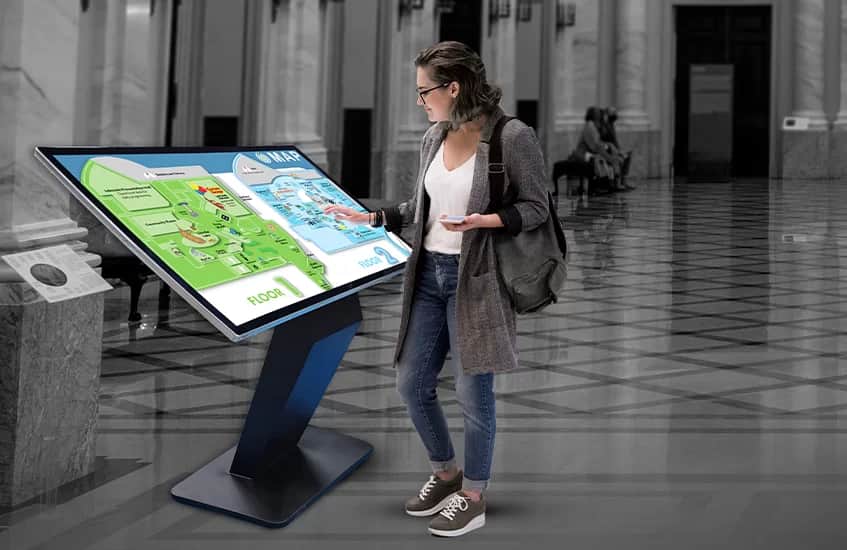
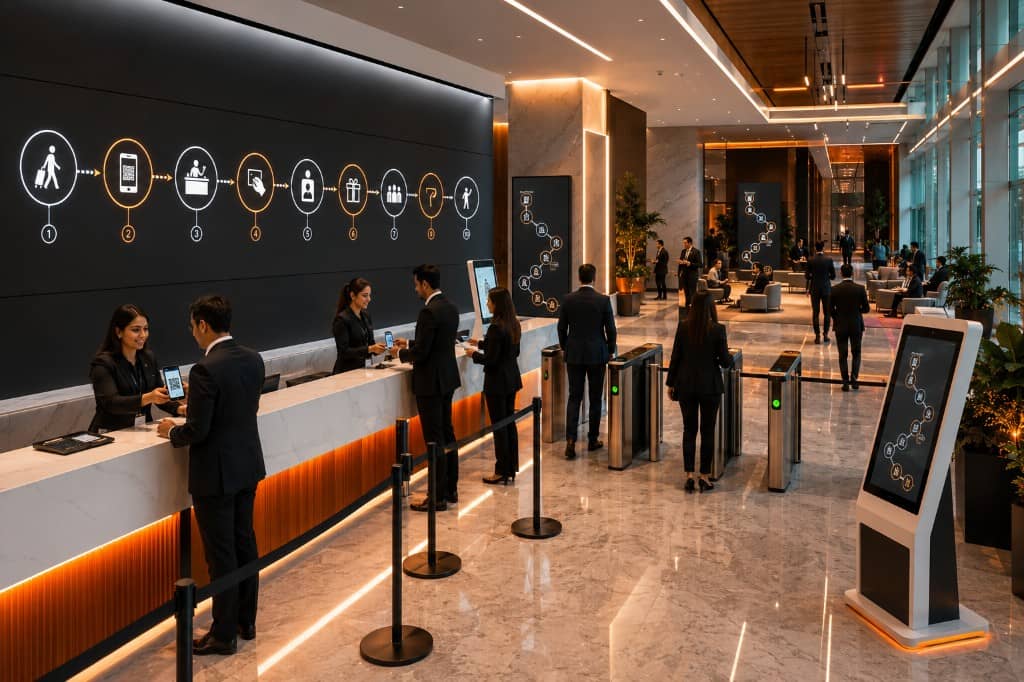
Designing the physical experience for Hall 2FF starts with an unusual instruction for an exhibition stand: slow it down. The competitive instinct at a trade show is to shout, but in a wellness and AYUSH context the differentiating sensation is calm, and calm is what makes a visitor stay long enough to have a real conversation. That translates into specific, buildable decisions. Use warm, high colour rendering lighting rather than cold flat panels, because it makes natural materials and human skin look correct. Choose real textures where budget allows, timber, stone, terracotta, woven fibre and living plant material, since visitors in this category touch surfaces and notice when everything is printed vinyl. Keep sightlines open and floor space generous, because a cramped stand reads as pressure. Introduce scent deliberately and lightly, using a single recognisable note tied to your practice rather than a diffuser competing with the neighbouring stand. Then build the two functional zones this audience actually needs. The first is a consultation nook, a semi private seated space where a practitioner from your team can spend eight to ten minutes with a visitor in something resembling an actual conversation. This is the highest value square footage on the stand. The second is a demonstration space, which is where credibility becomes visible rather than asserted. A therapist demonstrating a technique on a mannequin or a willing colleague, a display of raw herbs alongside the finished formulation, or a live preparation of a traditional process will hold a crowd far more effectively than any screen. Digital elements should support these zones rather than dominate them. A short prakriti or constitution assessment on a tablet, five or six questions, ending with a printed or emailed summary and a suggested protocol, gives visitors a reason to share contact details and gives you a profiled lead. A patient journey visualisation is close to essential for the medical value travel proposition, showing on a single screen or a well designed graphic panel how an international patient moves from first enquiry through teleconsultation, visa assistance, arrival, treatment, recovery stay and post treatment follow up, with indicative timelines and transparent cost bands. Facilitators make decisions on exactly that information and rarely find it presented clearly. Add an outcomes panel with real, defensible data, treatment volumes, accreditation certificates, practitioner qualifications, published studies, and be scrupulously careful about medical claims, because claims that cannot be substantiated will be challenged in this hall by people qualified to challenge them, and the reputational cost outweighs any short term persuasion. Provide content in more than one language if your target markets include the Gulf, Africa, Central Asia or Southeast Asia, and make sure a translated brochure exists as a downloadable file rather than only as a printed piece that runs out on the first afternoon. Seating matters more than exhibitors expect in this category, because the conversations that convert are longer than the standing conversations most stands are built for, and a visitor who has walked several halls at Pragati Maidan will stay considerably longer if there is somewhere comfortable to sit. Finally, keep refreshment simple and on message. A herbal infusion prepared and served properly, in real cups rather than plastic, costs very little and reliably buys several minutes of undivided attention from exactly the kind of visitor you travelled to Hall 2FF to meet.
With only 6 and 7 September available, the operational and follow up discipline around Sanjeevani has to be tighter than at a longer show, and the planning should begin with the building itself. Hall 2FF is on the first floor, so verify service lift dimensions, weight limits and access timings before committing to heavy structures, treatment furniture, stone elements or planting, and confirm the move in and move out windows in writing, since a two day event compresses both ends of the schedule severely. Anything that needs water, steam, oil warming or waste drainage requires an explicit services plan rather than an assumption, and any live demonstration involving heat, open flame or consumables needs safety clearance and a documented handling process. Power sanction should be calculated against real load including lighting, screens, refrigeration and any equipment used in demonstrations. Because dismantle will begin almost immediately after the second day closes, decide in advance which elements are returning, who is packing them and where the crates are stored, and assign one person to protect the leads, samples and personal equipment during teardown, which is when material most often disappears. On the commercial side, build your capture process around the fact that this audience segments into groups with genuinely different follow up needs. A practitioner wants clinical detail, training pathways and product supply terms. A resort operator wants protocols, therapist training, equipment and margin. A hospital administrator wants accreditation, integration and liability clarity. A medical value travel facilitator wants a package, a price band, a response time commitment and a named contact. Capture the segment as the first field on your lead form, followed by the specific interest, the geography they operate in, and the next step agreed, and keep the total to five or six fields so that it is actually completed during a busy hall day. Review the list on the evening of 6 September rather than waiting until the show ends, because there is still one day left in which to invite a serious prospect back for a longer conversation. After the show, respond within seventy two hours with material matched to the segment, and treat facilitators as an ongoing relationship rather than a transaction, since a single well supported agent can send patients for years. There is one further strategic point specific to this September. Sanjeevani sits alongside IPHEX across multiple halls and Bharat Health and Bharat Nutraverse Expo in Halls 4FF and 6 on the same dates, and later in the month Media Expo takes Halls 4GF and 5GF from 16 to 18 September. For an AYUSH or wellness brand planning a serious year, that clustering is an argument for building a modular stand kit and a reusable digital layer rather than a single use set. The consultation nook, the assessment tool, the patient journey visualisation and the outcomes panel are all reusable assets. Design them once, properly, with the ability to reconfigure content and language, and the cost per meaningful conversation across a full exhibition calendar drops substantially while the quality of the experience keeps rising.